The New Gala Playbook: It’s All About the Vibe
The black-tie dinner has gotten a modern makeover. Three nonprofit leaders share the new rules for winning over major donors.

By M.J. Prest
Senior Editor, Solutions
May 13, 2026 | Read Time: 7 minutes
For decades, the standard choreography of a nonprofit gala consisted of a few hundred well-dressed donors, a plated dinner, a paddle raise, and a gift bag as guests streamed out the door. But the major donors who fill those tables have changed — and so have the events designed to court them.

Wealthy philanthropists now account for an outsize share of charitable giving, and nonprofits are finding that galas can deepen relationships and give them a reason to stay involved the rest of the year.
Big donors have been to glitzy charity dinner parties a dozen times. What moves them today is an event that feels specific, intimate, and distinctly tied to the mission, the experts say.
That shift is forcing fundraisers to rethink nearly every element of a gala, from the guest list to the program to the swag. The most successful events in recent years tend to share similar characteristics.
“We’re trying to do it in a really authentic way, [to show] what it is that we do and to tell that story,” says Georgie Smith, president and founder of A Sense of Home, a Los Angeles nonprofit that furnishes homes for people emerging from foster care, homelessness, or natural disasters. “If billionaires come, they come because of the vibe.”
The Chronicle spoke to leaders from three organizations to learn how to throw a memorable gala that impresses major donors.
The gala is a relationship-building tool.
Your signature night of fundraising is an opportunity to bring donors old and new into the fold. The first stop should be tapping into your board members’ and major donors’ networks, encouraging them to invite their friends and family.
Forty-three trustees sit on the board of the Catholic Charities of the Archdiocese of New York, a federation of social-services agencies that help New Yorkers in need. Sheila Lennon, its senior director of development and events, says a third of its annual gala’s invitees are connected to board members.
If billionaires come, they come because of the vibe.
The rest of the 700-person guest list is split equally between existing and potential donors, and honorees and their guests. Honorees are typically business leaders in the New York area who have given to Catholic Charities in the past. “They also are a great way for us to invite new people to learn about our mission,” she says.
At its next gala in June, the honorees are Joseph Otting, CEO of Flagstar Bank, and Dina DiLorenzo, president of Guggenheim Investments.
“There’s always going to be some people that are attending solely for the reason that their boss is being honored — or their colleague, their client, their friend. So they may be just thinking, ‘Oh boy, I’ve really got to give,’” Lennon says.
The venue shapes how donors connect to each other and your mission.
For its October gala, A Sense of Home took a modern approach to how it used its event space at the Pacific Design Center. Instead of traditional tables, the nonprofit decorated living-room lounges with the same types of furniture it provides to the people it serves.
“What we were trying to create is the feeling of home, the coziness. So we turned what would be a boring, empty space into a homey-feeling experience,” says Smith.
With music playing in the background and caterers passing trays of food, guests could relax on couches and mingle with celebrities like Jeremy Renner and Drew Scott alongside people who had received help from the charity.
Because the event came just months after wildfires destroyed thousands of homes across the city, those choices landed with powerful impact — helping the small nonprofit raise $1 million.
“All of our staff at the event were wearing ‘I Heart LA’ T-shirts with our logo,” says Smith, turning the gala into “a celebration of coming together to support their fellow Angelenos.”
Don’t underprice the experience.
Be ambitious about ticket prices. A well-run gala can raise four times what it costs to produce, the experts say, and a high ticket price signals seriousness about your goals.
Catholic Charities holds its annual gala at the American Museum of Natural History, an iconic Upper West Side venue that books out at least a year in advance. Last year’s event raised $3.6 million, which set an organizational record.
Individual tickets are $1,000 — “the going rate for New York City galas,” says Lennon. A sponsor ticket of $2,500 gets a donor recognition in the program. Tables start at $10,000 and go up to $100,000 for a “visionary” table, which is placed closer to the action.
Each table has a host, whether it’s a trustee or even a staff member to talk about the mission to guests.
When finalizing the seating arrangement, pair your organization’s boosters with new prospects so they get to rub elbows with your biggest ambassadors, says Lennon: “The seating is an art and a strategy.”
Celebrate your top donors.
The night should highlight the donors who matter most to your organization. The U.S. Soccer Foundation, which is headquartered in Washington, D.C., held its January gala in Miami, where its biggest donor calls home.
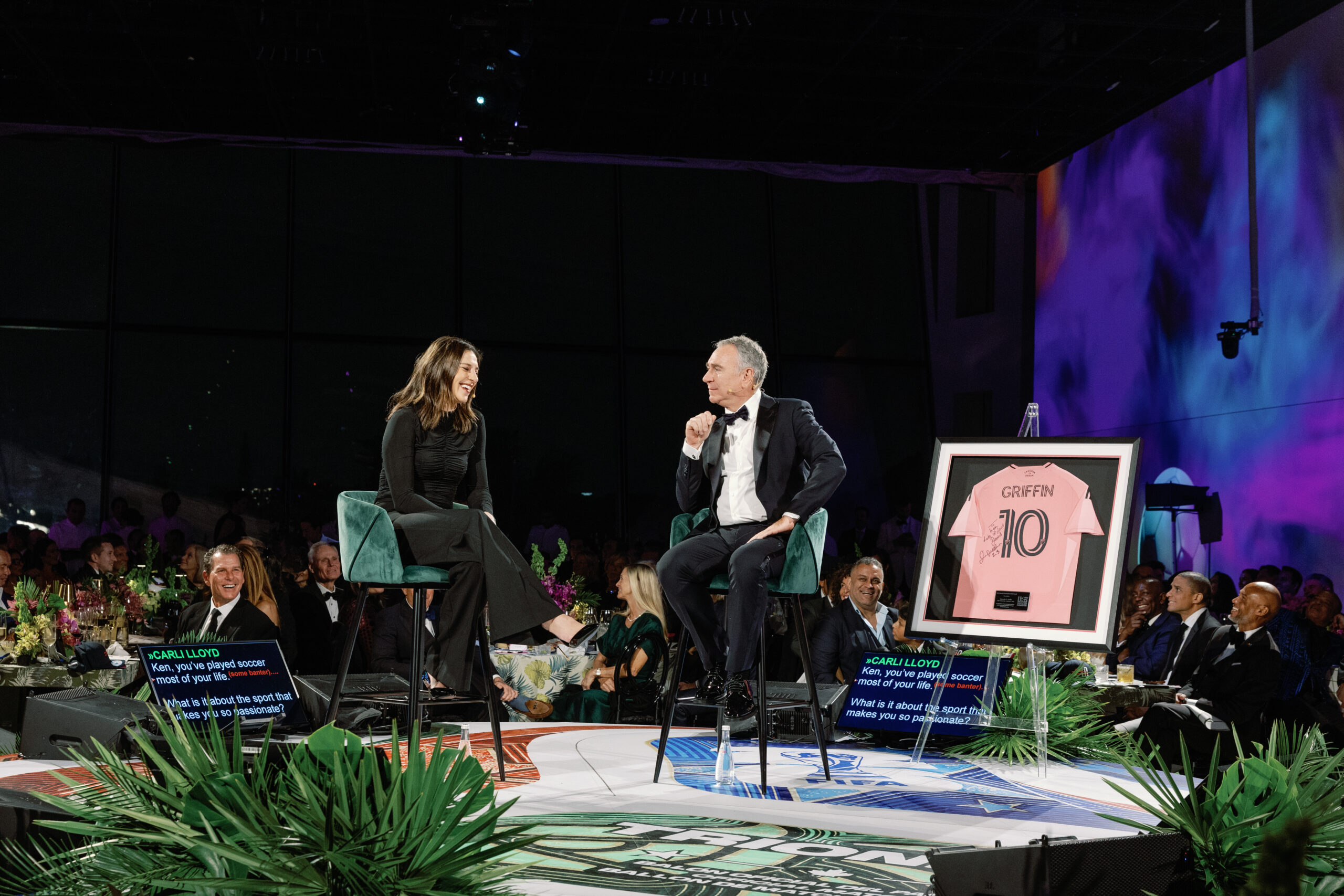
The event included a segment to honor the billionaire Kenneth Griffin, who founded the Miami hedge fund Citadel Investment Group and has given the nonprofit $8 million over the years, says Lindsay Weiner, its senior director of philanthropy.
A well-run gala can raise four times what it costs to produce, the experts say.
That portion of the program included a surprise video message from English football star David Beckham and a fireside chat between Griffin and former U.S. national soccer team player Carli Lloyd.
The fireside chat format “went over really well. It was really engaging, and not just a speech that you would typically hear in that situation,” says Weiner.
Several board members who have given generously were also recognized at that time. Then participants in the organization’s youth programs came up on stage to talk about what soccer means to them.
“Seeing the kids and how they’ve benefited from our evidence-based programming, it all came together and told the story of who we are and where we’re going,” says Weiner.
Corporations can share the costs.
Corporate sponsorships can offset event expenses and lock in revenue ahead of time.
Home-furnishing companies Ruggable and Jenni Kayne provided the decor for A Sense of Home’s gala, and gift bags were filled with donated products from sponsors like Voluspa and Osea.
However, swag is now optional. If you want to do it, let sponsors foot the bill, says Lennon: “Most donors and funders want you to spend your time and money on the mission more than the gift bag.”
The U.S. Soccer Foundation’s gala did double duty as the public launch of its $30 million capital campaign. Weiner says that became a compelling talking point in conversations with its primary corporate donors, like Adidas and Musco Lighting.
“All of our sponsors that came on, they weren’t just sponsoring a one-off event,” says Weiner. “We were looking at this as, you’re really supporting this capital campaign. You’re part of this next phase of our work — more of a partnership approach.”
Guests will remember the unscripted parts.
If something doesn’t go according to plan, try to roll with it. Some of the best gala moments are the ones nobody expected.
The live fundraising portion of A Sense of Home’s 2024 gala nearly fell apart before it began, says Smith, its founder. The actor and director Shawn Levy learned he would be leading it from his wife just minutes before he was set to take the stage.
Smith joined him at the microphone, and in front of the audience they realized they had very different ideas about where the fundraising bids should begin. “He was starting at $1,000. I was like, no, let’s start at $200,000,” Smith recalls. “Everyone thought it was a comedy show and we were just dying.”
The guests loved it, though. It ended up raising $500,000.
The work begins when the night ends.
A successful gala does more than yield a big fundraising total. It’s also a springboard for deeper involvement with your wealthiest donors — and the morning after is when that work begins.
Weiner says the days following an event are critical for building on its momentum. Her follow-up tasks include sending thank-you notes to donors, selecting photos to share with the press, shipping auction items, and compiling an impact report for sponsors.
“People think that once the event’s over, you can take a little break and rest, but I feel that the week after is almost busier than some of the lead-up,” she says.
“Right afterward, you’re working really hard to continue those conversations, showing gratitude, working on your stewardship, and continuing that cultivation of those relationships.”