Giving USA Reports a Record High. But Here’s What It Misses.
Donations hit a high-water mark, but the donor base keeps shrinking: 'We're measuring vinyl in a Spotify world.'

By Michael Wasserman
Contributor
June 24, 2026 | Read Time: 6 minutes
In April, Piotr Hancke, a 23-year-old creator working from an apartment in Poland, raised nearly $70 million for a children’s cancer charity in nine days. The campaign drew 1.54 million concurrent viewers and more than 3 million individual donations.
To put that in perspective, in those nine days, one person brought in more than a full year of Red Nose Day, the charity drive NBC airs every spring. This sum is also more than the star-studded Hand in Hand telethon raised for hurricanes Harvey and Irma. This young donor nearly matched the annual total of the Pan-Mass Challenge — one of the most successful athletic fundraisers in the world, which brings together 6,500 cyclists, 3,500 volunteers, and 200 corporate sponsors every August.

If you lead a nonprofit, Hancke’s runaway success should give you pause, because what reads at first like a curiosity is becoming a pattern, yet many in the fundraising world keep filing it away as an exception. The longer we treat it this way, the more we miss what’s actually changing. And almost none of it appears in the reports we rely on to understand the health of giving.
Let me get the conflict out of the way. I co-founded the peer-to-peer fundraising platform Tiltify, which means I make money when the migration I’m describing occurs. So don’t take my word that this is a trend.
Trust the data. I’m not neutral but I can watch this giving happen in real time, in channels the rest of the sector isn’t measuring yet.
Separate what the report counts from what donors are actually doing.
The numbers troubling the sector are not wrong. In the United States, fewer than half of households give to charities, and the pool of donors has been shrinking steadily for years even though the number of dollars donated has climbed. Giving reached a high-water mark of $617.2 billion in 2025, according to Giving USA, yet the Fundraising Effectiveness Project’s most recent data shows the number of donors fell 3.6 percent last year. That’s the fifth straight year of decline, with the steepest losses among small-dollar donors — those giving $100 or less, who make up more than half of all donors.
If you only look at the instruments we have always used, the story they tell is consistent and grim. But those instruments were built for a giving economy that has morphed.
The anxiety makes sense. The reports our sector trusts most — the Fundraising Effectiveness Project, Giving USA, the annual participation studies — all describe a slow erosion. If you only look at the instruments we have always used, the story they tell is consistent and grim. But those instruments were built for a giving economy that has morphed.
The reports that define how we talk about generosity were designed to measure one specific thing: money flowing to recognized organizations through recognized channels. A gift to a registered charity counts. A pledge processed through a traditional fundraising platform counts. That was a sensible way to take the temperature of giving in 2008, when almost all of it moved through those channels in the first place. That is no longer the case.
Look for the giving happening in channels your reports can’t see.
What those instruments were never built to capture is the participatory online activity that has grown up alongside them. They do not see the peer-to-peer appeal an influencer makes to her community on a Tuesday night. They do not see the Discord server that turns into a fundraiser, or the creator who folds a cause into a 12-hour broadcast and attracts six figures in donations before signing off.
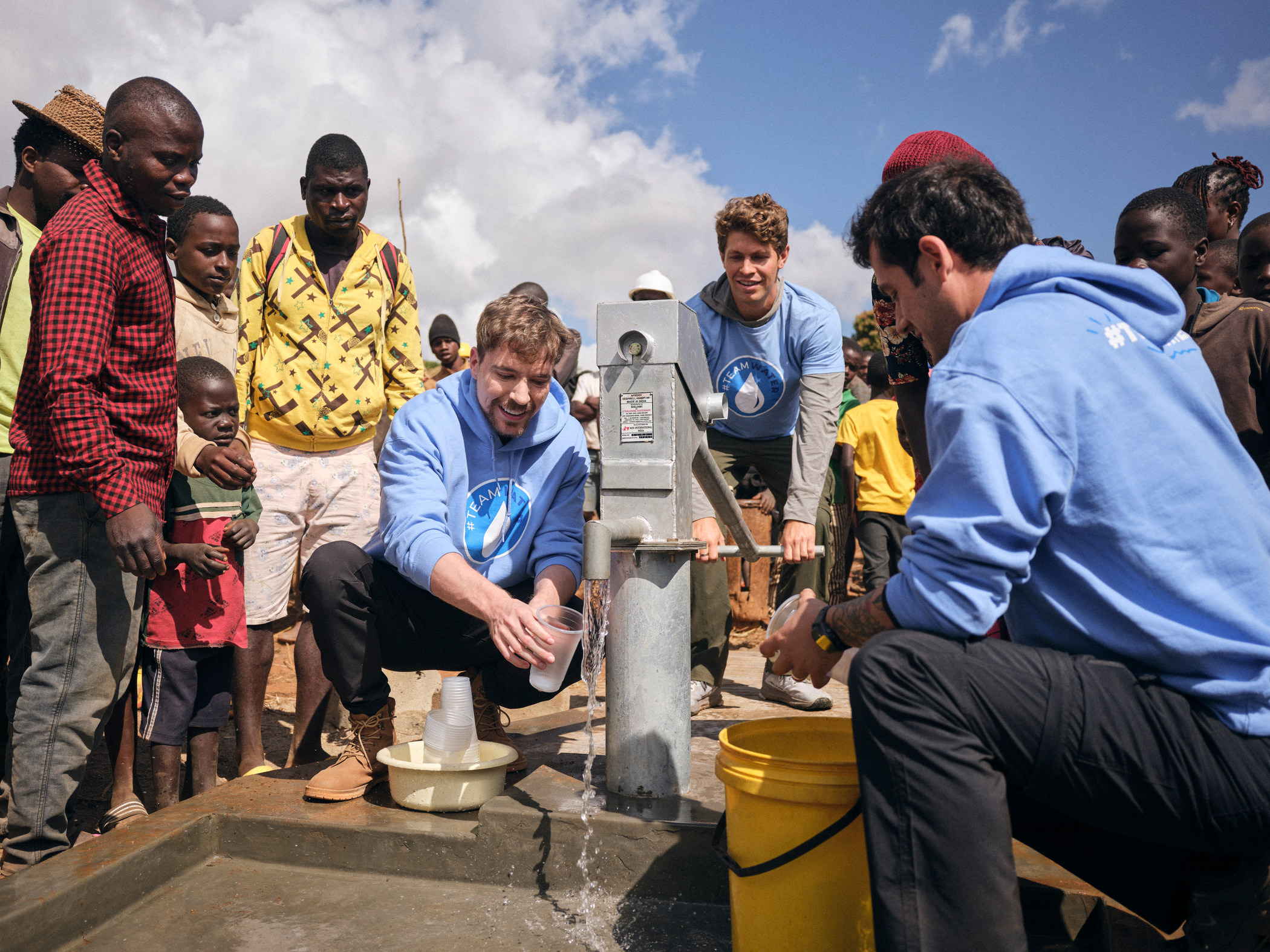
And these are not edge cases. In the past year alone, Ryan Trahan created a 50-day vlog about a road trip that raised $11.6 million for St. Jude Children’s Research Hospital; TeamWater held a monthlong crowdfunding push that pulled $40 million from thousands of participants; and Z Event conducted a three-day streamer marathon that raised close to $19 million. Same behavior, different container, every time.
That activity is real, it is large, and it is almost entirely invisible to the reports we use to declare the patient sick.
The nonprofit world is measuring vinyl in a Spotify world. For years, the music industry watched album sales fall and concluded that people were listening to less music, when in reality people were listening to far more music through a format the old sales charts could not count. The charts were not lying. They were measuring a format the audience had already walked away from.
The same thing is happening in charitable giving. The container we keep counting is shrinking, but the behavior underneath it — the impulse to pool small amounts of money around a cause and a community in real time — is not contracting at all.
Read this moment as a migration.
To be precise, this is not only money relocating. This shift includes the participation of volunteer fundraisers that simply did not exist before, from people the old reports were never going to count as donors in the first place.
The nonprofit world is measuring vinyl in a Spotify world.
This is not a critique of the Fundraising Effectiveness Project or the teams behind these reports. Those reports measure what they were built to measure, and they measure it honestly. The problem is that we have let a measurement of one channel stand in for the health of the whole, despite the emergence of a new participatory giving economy since that framework was set.
This shift has practical implications. If you run a nonprofit and you are budgeting against the decline narrative, you are planning to defend a shrinking position. If you read the same period as a migration rather than a collapse, you start asking a more useful question: How does your cause show up in the places where participation is actually growing?
Build giving by peers into your acquisition strategy.
That does not mean abandoning the channels that still work. It means building creator-led and peer-to-peer giving into your acquisition strategy rather than treating it as an experiment. It also means lowering the price of participation so that a $5 gift inside a livestream feels as legitimate as a $500 gift through the annual appeal, and meeting a generation of donors inside their communities.
The organizations that will look healthy in five years are the ones building for the container the audience has already moved to — the same way the record labels that survived were the ones who stopped counting vinyl and started measuring streaming.
The sector gets to decide which story it believes about this moment. We can keep reading our own instruments as proof that people care less, and build strategies to manage decline. Or we can accept that the instruments are measuring giving methods that don’t capture all forms of charitable giving, find the giving that is happening in plain sight, and build for where it is going.
One of those choices treats the next decade as a retreat. The other treats it as the largest opportunity to increase donor participation in a generation. The organizations that act on that difference will not look like outliers in five years. They will define the baseline.